Ready for a Pacific Northwest motorcycle camping trip? This beginner-friendly guide breaks down essential gear, bike prep, and route planning to ensure a safe and fun adventure. Learn how to pack smart, ride prepared, and enjoy the stunning scenery of the PNW on your first motorcycle camping journey.
Dreaming of hitting the open road on your motorcycle, with nothing but the sky and the stunning Pacific Northwest landscape ahead? Many new riders feel a bit overwhelmed by the idea of combining their love for two wheels with the freedom of camping. It seems like a lot to manage – the bike, the gear, the route. But what if I told you it’s more accessible than you think? This guide is here to make your first motorcycle camping trip a breeze, turning those worries into excitement. We’ll cover everything you need to know, step-by-step, so you can pack your bags and hit the road with confidence. Get ready to discover the joy of motorcycle camping in the beautiful PNW!
Your First Pacific Northwest Motorcycle Camping Trip: A Beginner’s Guide

The Pacific Northwest, with its lush forests, dramatic coastlines, and majestic mountains, is an absolute paradise for motorcycle riders. Adding camping to the mix? That’s a recipe for an unforgettable adventure! As Barry K. Richmond, your go-to guy for all things motorcycle, I want to make sure your first foray into motorcycle camping is safe, enjoyable, and absolutely brimming with confidence. Forget complicated jargon and daunting tasks; we’re going to break down this exciting journey into simple, manageable steps. This isn’t about being a seasoned adventurer overnight; it’s about taking that first brave, well-prepared step.
Whether you’re eyeing the rugged beauty of the Oregon Coast, the evergreen wonderland of Washington’s Olympic Peninsula, or the vast wilderness of Idaho’s Panhandle, the PNW offers endless possibilities. We’ll focus on the essentials, ensuring you can focus on the ride and the incredible scenery instead of stressing about the “what-ifs.” Let’s get you ready for a successful and incredibly rewarding motorcycle camping trip!
Pre-Trip Motorcycle Preparation: Ensuring Your Ride is Ready

Before you even think about packing a sleeping bag, let’s talk about your steed – your motorcycle. A well-maintained bike is your most crucial piece of gear. For any motorcycle camping trip, especially your first, a thorough check-up is non-negotiable. Think of it as giving your bike a doctor’s visit before a big hike. This ensures reliability and, most importantly, your safety on the road.
The Essential Motorcycle Inspection Checklist

Here’s a simple checklist to go through. Don’t worry if you’re new to this; most of these are visual checks or simple tests. If anything seems beyond your comfort level, don’t hesitate to take it to a trusted mechanic. They can often do a quick inspection for a reasonable fee.
| Component | What to Check | Why it’s Important | Beginner Action |
|---|---|---|---|
| Tires | Tread depth, pressure, any visible damage (cuts, bulges) | Tire health is critical for traction and handling. Underinflated tires wear unevenly and can affect stability. | Check tire pressure with a gauge. Look for wear bars or shallow tread. Visually inspect for punctures or cracks. |
| Brakes | Brake fluid level, pad thickness, lever/pedal feel | Your brakes are your life. You need them to work perfectly, especially when loaded down. | Locate the brake fluid reservoir (often translucent). Check if the fluid is between the MIN/MAX lines. Squeeze brake levers/press pedals; they should feel firm, not spongy. |
| Lights | Headlight (high/low beam), taillight, brake light (front/rear), turn signals | Visibility is key for safety. Ensure all lights are functioning correctly, day and night. | Turn on the ignition and check all lights. Have a friend check your brake lights and turn signals while you operate them. |
| Chain/Belt | Cleanliness, lubrication, tension (for chain) | A well-maintained drive system ensures smooth power delivery and prevents premature wear. | For chains: Check for rust or grime. Spin the wheel and feel for tight spots. Check slack per your owner’s manual. Lubricate regularly. Belt drives generally require less maintenance. |
| Fluids | Oil level, coolant level (if applicable) | Proper fluid levels keep your engine running smoothly and prevent overheating. | Locate the oil sight glass or dipstick. Check the level when the engine is cool and the bike is upright. For liquid-cooled bikes, check the coolant reservoir. |
| Battery | Terminals clean and tight, age of battery | A dead battery means a dead start. Ensure it’s in good health, especially for longer trips. | Visually inspect terminals for corrosion (white or blue powdery substance). Tighten if loose. If your battery is old (3-5 years), consider proactive replacement. |
| Cables | Throttle, clutch, and brake cables for fraying or binding | Smooth operation of these controls is vital for rider comfort and safety. | Operate the throttle, clutch, and brakes. They should move freely without sticking or feeling rough. Check for any visible damage to the cable housing. |
Don’t Forget the Basics: Tools and Spares

For a camping trip, packing a few essential tools and spares can save you from being stranded. Keep it simple for your first outing. A basic toolkit is your best friend.
- Tire Repair Kit: For plugging tubeless tires (essential!).
- Small Air Pump or CO2 Inflator: To reinflate tires after a plug.
- Basic Wrench Set/Socket Set: Enough to tighten common bolts.
- Screwdrivers: Phillips and flathead.
- Pliers.
- Zip Ties and Duct Tape: The universal fixers!
- Owner’s Manual: Crucial for specs like tire pressure and oil type.
- Spare Fuses: A must-have.
Consider a small bottle of chain lube if your bike has a chain. For tubeless tires, a tire plug kit is a lifesaver. For spoke wheels, ensure you have spares and know how to adjust them – though for a beginner trip, sticking to paved roads might be wise.
Choosing Your Gear: Smart Packing for Motorcycle Camping

This is where motorcycle camping gets fun – and a little tricky! Space is limited, so every item counts. We need to pack efficiently without sacrificing comfort or safety. The goal is to find lightweight, compact gear that serves multiple purposes.
Essential Camping Gear for the Road

Think minimal, think essential. Here’s a breakdown of core items:
- Tent: A lightweight, compact backpacking tent is ideal. Look for one that packs small and is easy to set up. Check its waterproof rating.
- Sleeping Bag: Choose one rated for the expected nighttime temperatures in the PNW. A compression sack is your friend here to make it smaller.
- Sleeping Pad: Essential for comfort and insulation from the ground. Inflatable pads are great for comfort and packability.
- Camp Stove & Fuel: A small, portable backpacking stove is perfect. Don’t forget fuel!
- Cookware & Utensils: A single pot, a mug, and a spork usually suffice.
- Food & Water: Non-perishable, easy-to-prepare meals. A water filter or purification tablets are a good backup.
- First-Aid Kit: A comprehensive kit is vital. Know what’s in it!
- Headlamp/Flashlight: With extra batteries.
- Toiletries: Biodegradable soap, toothbrush, toothpaste, etc.
- Appropriate Clothing: Layers are key in the PNW!
Packing It All Up: Luggage Solutions

How you carry your gear is as important as the gear itself. You’ll need secure, waterproof luggage.
- Saddlebags: Soft saddlebags are generally more forgiving and cheaper than hard cases. Ensure they are waterproof or use dry bags inside.
- Tail Bag: A great place for bulkier items like your sleeping bag or tent.
- Tank Bag: Perfect for quick-access items like your phone, wallet, snacks, and map.
- Backpack (Wearable): Generally discouraged for longer rides due to discomfort and heat buildup, but a small one for essentials that can be worn at camp is fine.
Pro Tip: Pack your most-used items in your tank bag. For items you’ll need at camp but not on the road, put them in your tail bag or one of your saddlebags. Always secure your luggage properly so it doesn’t shift while you’re riding. A few bungee cords or cargo nets can be very helpful.
Choosing Your Route and Campsite: The PNW Adventure Begins

The Pacific Northwest offers incredible diversity, from coastal highways to mountain passes. For your first trip, keeping it relatively simple is wise. Stick to paved roads unless you’re on a dual-sport or adventure bike and are experienced with off-road riding.
Beginner-Friendly Route Ideas
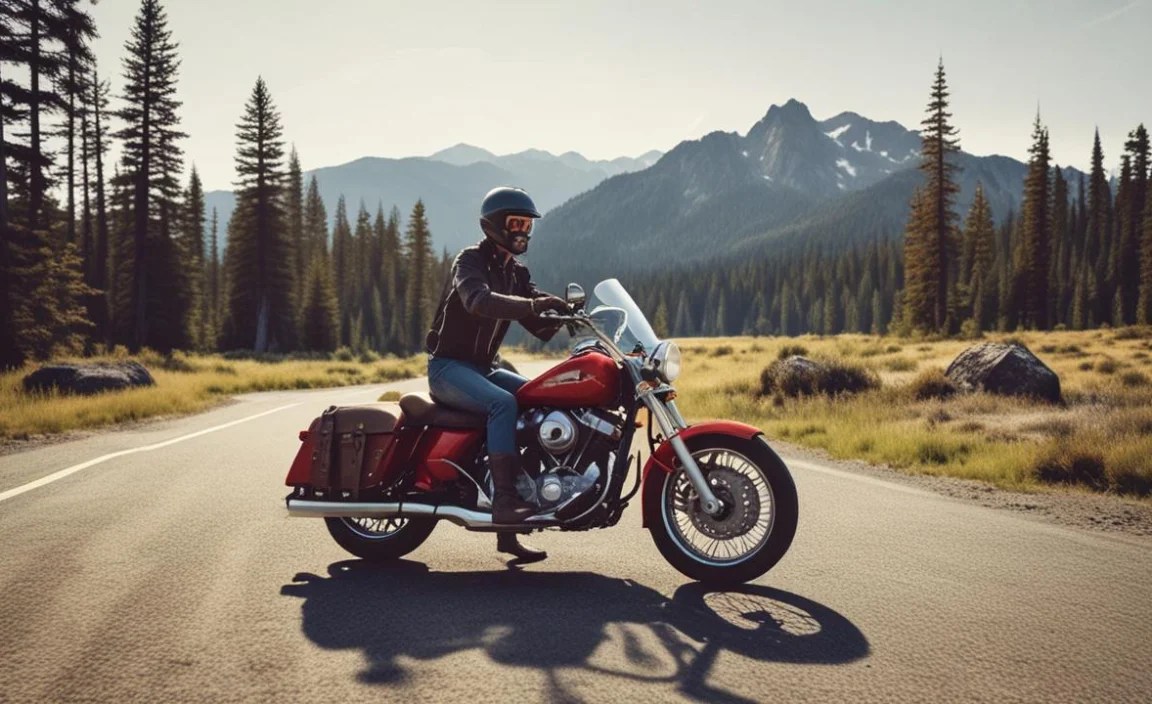
- Oregon Coast Highway (US-101): This iconic route offers stunning ocean views, charming towns, and plenty of state parks with campgrounds. Start with a shorter section, perhaps focusing on a loop from Portland down to Newport and back.
- Washington’s Olympic Peninsula Loop: Explore the lush rainforests of the Hoh, the dramatic coastline, and the majestic mountains. The loop around the peninsula can be done in a few days.
- North Cascades Scenic Highway (WA-20): If you’re comfortable with mountain roads, this route is breathtaking, but be aware of seasonal closures.
- Crater Lake National Park (Oregon): Combine stunning volcanic scenery with a memorable ride.
For your first trip, aim for shorter distances each day. Perhaps only 150-200 miles. This gives you time to set up camp, relax, and not feel rushed. Look for routes with plenty of services (gas stations, food). State Parks are often excellent choices for campgrounds; they are well-maintained, often scenic, and typically have good facilities.
Campsite Considerations
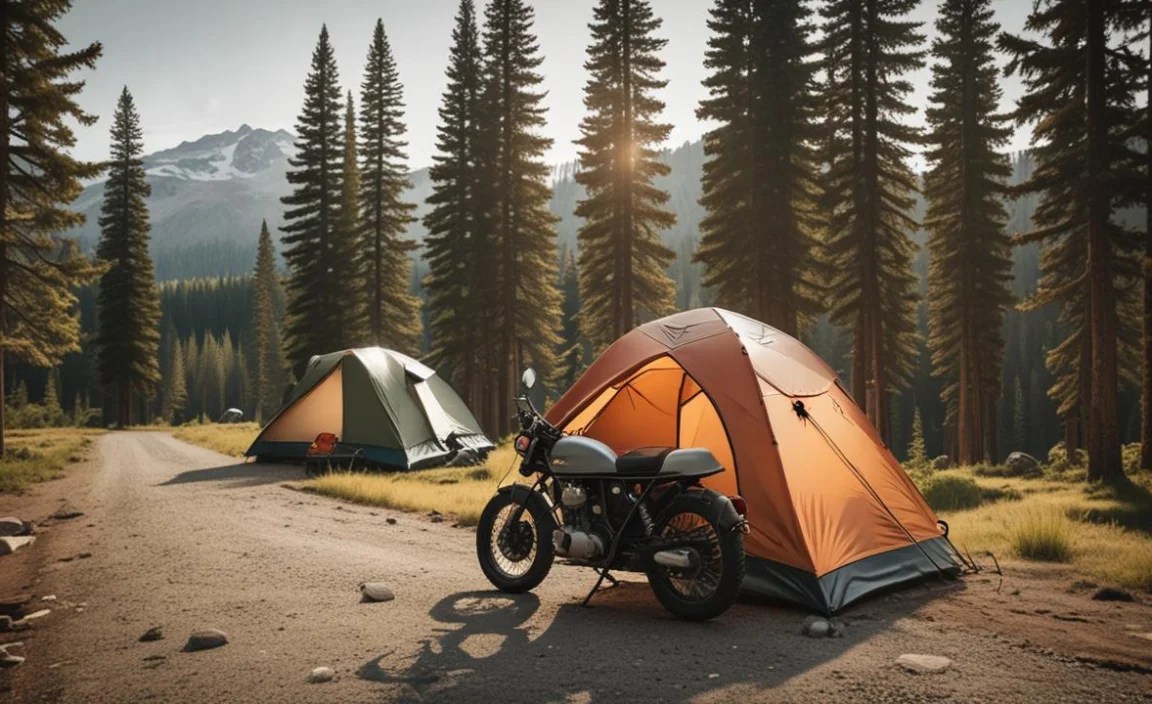
When planning your overnight stops, think about these factors:
- Reservations: For popular parks, especially in peak season, reservations are a must. Book well in advance through services like Recreation.gov or state park websites.
- Facilities: Check what amenities are available. Do you need showers? A place to charge your phone? Most campgrounds will have restrooms and potable water.
- Proximity to Route: You don’t want to ride miles off your planned route just to get to your campsite.
- Quiet vs. Social: Some campgrounds are lively social hubs, others are more secluded. Choose based on your preference.
Remember to check local regulations regarding campfires, especially during dry seasons. The U.S. Forest Service and state park websites are great resources for current fire restrictions.
Riding Safety for Motorcycle Camping

Safety is always paramount, but when you’re carrying extra weight and heading to remote areas, it deserves extra attention. You’re not just responsible for your bike’s performance but also for how you handle it, especially when loaded.
Riding Tips for Loaded Motorcycles

Adding luggage changes your bike’s center of gravity and handling characteristics. This is crucial to understand.
- Slower Speeds: Give yourself more time and space. Loaded bikes accelerate slower and brake less efficiently.
- Gentle Inputs: Avoid sudden movements. Apply throttle, brakes, and steering inputs smoothly.
- Cornering: Lean angle might need to be adjusted. Your bike will feel heavier in turns. Practice gentle leans at lower speeds in a safe area before you hit the highway.
- Uphill/Downhill: Use your gears wisely. You’ll need more power uphill and more engine braking downhill.
- Parking: Find level ground to park. A loaded bike is even harder to upright on a slope. Use your side stand carefully.
Personal Safety Gear: The Rider’s Lifeline

Always wear your protective gear. It’s your first and best line of defense.
- Helmet: A DOT-approved full-face or modular helmet is best.
- Eye Protection: Integrated into your helmet or separate goggles/glasses.
- Jacket and Pants: Motorcycle-specific gear made of abrasion-resistant material (leather or textile) with armor.
- Gloves: Full-fingered gloves protect your hands.
- Boots: Sturdy, over-the-ankle boots.
The Pacific Northwest can have unpredictable weather. Be prepared for rain, even in summer. A good waterproof set of riding gear or rain gear is essential. Visibility is also key – consider bright colors for your jacket and helmet.
Planning Your First Motorcycle Camping Trip: Putting It All Together

Now that we’ve covered the bike, the gear, and the riding, let’s tie it all together. For your first trip, keeping it simple is the key to success and enjoyment.
A Sample Beginner Trip Itinerary (3 Days/2 Nights)

Objective: A scenic and relaxed coastal ride.
Region: Central Oregon Coast.
- Day 1: Portland to Tillamook (approx. 75 miles)
- Depart Portland in the morning after a final bike check.
- Take OR-6 W to OR-53, then US-101 N to Tillamook.
- Visit the Tillamook Creamery for lunch and a tour.
- Set up camp at a nearby State Park campground (e.g., Nehalem Bay State Park or Cape Lookout State Park – check availability and book ahead!).
- Enjoy exploring the campground and preparing a simple camp meal.
- Day 2: Tillamook to Newport (approx. 90 miles)
- Enjoy breakfast at camp.
- Ride south on US-101. Stop at scenic overlooks and explore small towns like Pacific City (view Haystack Rock).
- Have lunch in Lincoln City.
- Arrive in Newport. Visit the Oregon Coast Aquarium or the historic Bayfront.
- Set up camp (e.g., South Beach State Park).
- Enjoy a relaxed evening, perhaps grilling at the campsite.
- Day 3: Newport to Portland (approx. 120 miles)
- Morning ride along the coast.
- Head inland via US-20 E towards Corvallis, then OR-34 E and I-5 N back to Portland.
- This route offers a mix of coastal and valley scenery.
Remember: This is just a template. Adjust mileage, stops, and destinations based on your comfort level and interests. The most important thing is to plan, but also be flexible!
Frequently Asked Questions About Motorcycle Camping in the PNW
Q1: How much weight can my motorcycle carry for camping?

Your motorcycle’s owner’s manual will specify its Gross Vehicle Weight Rating (GVWR) and typically a maximum payload capacity. It’s crucial not to exceed this. For a beginner, aim to pack lighter than the maximum. A good rule of thumb is that the loaded motorcycle’s weight shouldn’t significantly alter its handling characteristics.
Q2: What kind of motorcycle is best for camping?

Any motorcycle can be used for camping, but touring bikes, cruisers, and adventure/dual-sport bikes are often favored due to their comfort on longer rides and better load-carrying capacity. However, a smaller bike can absolutely work for a minimalist camping setup if you pack smart.
Q3: Is it safe to ride my motorcycle in the rain in the PNW?

Yes, it’s safe if you are prepared and ride cautiously. Ensure your tires have good tread and are properly inflated. Wear full waterproof riding gear, and keep your speeds moderate. Look for reduced traction on painted
